
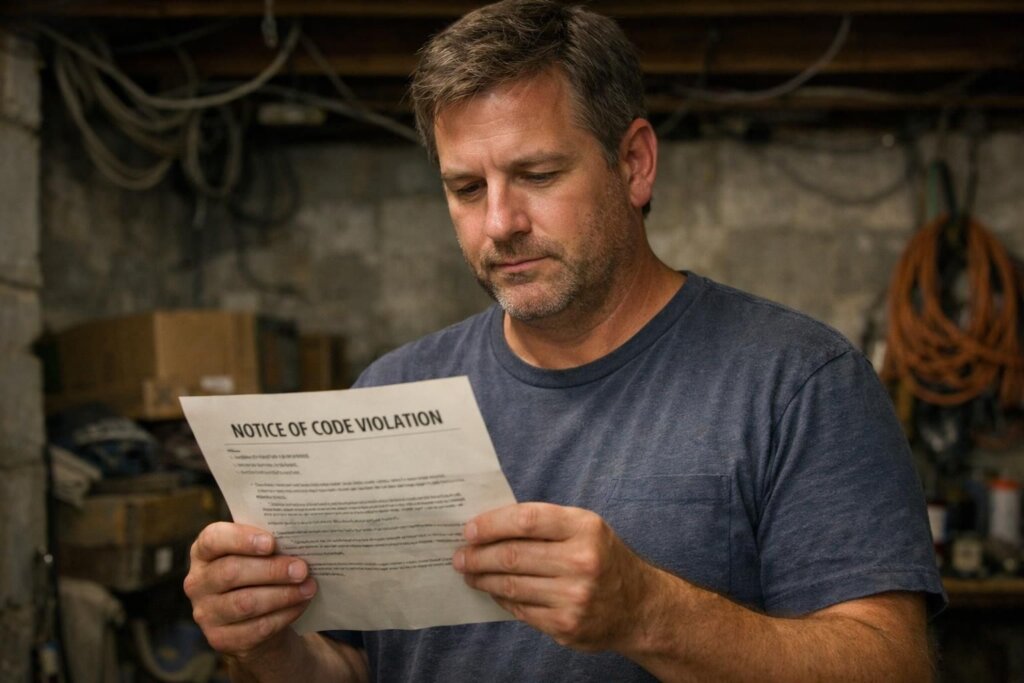
A code violation can make selling a house feel difficult, especially when you are also dealing with repair costs, an inherited property, a vacant home, unpaid taxes, or a deadline to move. However, a violation does not automatically make your West Seneca property unsellable.
The best path depends on what is recorded against the house. Before repairing anything or accepting an offer, confirm the municipal, tax, and title status, then compare repairing, listing as-is, and selling directly.
Quick Answer
You may be able to sell a house with code violations as-is in West Seneca, NY. An as-is contract does not automatically remove local requirements or New York disclosure duties. Certain vacant and abandoned residential properties may also require a West Seneca point-of-sale inspection, so verify the rules for your address before scheduling a closing.
Start by Identifying the Exact Problem
Homeowners often use “code violation” to describe anything wrong with a house, which can lead to unnecessary repairs or missed issues.
Repair Problems Are Not Always Official Violations
A leaking roof, damp basement, old furnace, damaged driveway, or outdated electrical panel may reduce the property’s value without appearing in municipal enforcement records.
An Active Violation Is a Municipal Matter
An active violation generally means a code official identified a condition that conflicts with a building, property-maintenance, zoning, fire, health, or safety requirement.
The Town of West Seneca Code Enforcement Office reviews permit applications, inspects residential and commercial properties, and oversees required inspections for permitted work.
Open Permits Are Separate From Violations
A previous owner may have obtained a permit but never completed the final inspection.
The work may appear finished while the municipal file remains open, which can delay a sale.
Unpermitted Work May Require Further Review
Examples include:
- A finished basement without approval
- A bedroom without approved egress
- A garage conversion
- Electrical or plumbing work without permits
- An unapproved deck, porch, shed, or addition
- A two-family use that does not match municipal records
Ask Code Enforcement what inspection, documentation, or corrective work is required.
West Seneca’s Rule for Certain Vacant Properties
West Seneca has a point-of-sale inspection process for qualifying vacant and abandoned residential real property. This is one of the most important local details for homeowners selling a distressed or long-empty house.
The rule is not written as a universal pre-sale inspection requirement for every occupied home. It applies to properties meeting the definition used in Chapter 58 of the Town Code.
For covered nonjudicial transfers, the owner, agent, or mortgagee generally must arrange for a town inspection no more than 30 days before transfer. Judicial sales follow a different timeline.
An Empty House Is Not Automatically Legally Vacant and Abandoned
A property may be empty because of relocation, inheritance, tenant turnover, or renovation. Those facts alone do not confirm that Chapter 58 applies.
Contact West Seneca Code Enforcement and ask whether the property is classified under the town’s vacant and abandoned property rules.
What the Inspection May Affect
The inspection findings may affect repair responsibilities, municipal approval, timing, and any required escrow before closing.
At the time of writing, the published fee schedule lists:
| Property type | Published fee |
|---|---|
| Single-family dwelling | $200 |
| Two-family dwelling | $300 |
| Multifamily property | $200 for the first unit, plus $50 for each additional unit |
| Reinspection | $25 |
Confirm current fees directly with the town because municipal charges and procedures can change.
Can You Sell Before Every Violation Is Corrected?
Possibly, but the answer depends on the property.
For a covered vacant or abandoned property, West Seneca’s code describes a waiver process that may allow a transfer before all identified work is finished. That process can involve advance approval, a contractor’s repair estimate, a buyer commitment to complete the work, and an escrow arrangement.
A promise that “the buyer will fix it later” does not replace town approval or a properly drafted contract.
For an occupied property outside Chapter 58, the result may depend on the violation’s severity, correction deadlines, municipal costs, open permits, buyer financing, title findings, and contract terms.
A cash buyer may be more flexible than a financed buyer, but paying cash does not override municipal rules.
Does “As-Is” Remove Disclosure Responsibilities?
No. “As-is” generally means the buyer agrees to evaluate the house in its current condition, subject to the contract. It does not allow a seller to hide known defects, municipal notices, open permits, or other material information.
New York residential sellers may need to provide a Property Condition Disclosure Statement, although certain transactions are exempt. Review the current New York disclosure information and discuss the transaction with a New York real estate attorney.
Give your attorney copies of:
- Violation notices and inspection reports
- Open or expired permit information
- Contractor estimates
- Municipal correspondence
- Known structural, electrical, plumbing, or environmental concerns
- Prior fire, flooding, or insurance damage
- Occupancy or zoning issues
- Municipal repair charges or assessments
Three Ways to Sell a West Seneca House With Violations
1. Complete the Required Work and List Traditionally
This may be appropriate when the violations are limited, contractors are available, and you have enough time and money to finish the work properly.
This route may attract more financed buyers and support a stronger price, but risks include cost overruns, permit delays, hidden damage, and carrying expenses.
Before approving a large renovation, separate mandatory compliance work from optional cosmetic upgrades.
2. List the House As-Is With an Agent
An as-is listing can provide market exposure without completing every repair and may attract investors or renovation buyers.
However, “as-is” does not stop a buyer from requesting an inspection. Financed buyers may also face appraisal, insurance, or lender requirements.
Choose an agent familiar with distressed Western New York properties and ask how the violations may affect pricing, financing, disclosures, and marketing.
3. Sell Directly to a Cash Home Buyer
A direct cash sale may be practical when the house needs extensive work, has been vacant, contains unwanted belongings, or must be sold without managing contractors and showings.
The offer will usually be below the possible retail value after renovation because it reflects repairs and resale risk. The tradeoff may be fewer financing issues, showings, and repair negotiations.
Review how Shamrock Home Buyers purchases houses before comparing this process with a traditional sale.
Five Steps to Take Before Choosing a Selling Path
Step 1: Contact West Seneca Code Enforcement
Ask which violations remain open, whether permits are incomplete, whether an inspection is required, and whether Chapter 58 applies.
Useful questions include:
- Which violations are active?
- Is there a correction deadline?
- Are fines or municipal costs involved?
- Are permits incomplete or expired?
- Is a certificate of code compliance missing?
- Does the vacant-property inspection rule apply?
- Can the property transfer before repairs are completed?
- Could a waiver or escrow arrangement apply?
Keep copies of notices, emails, permit records, inspection reports, and town instructions.
Step 2: Review Taxes and Title Records
The Erie County Clerk’s Land Records Office records deeds, mortgages, satisfactions, judgments, liens, and other property interests.
You can also review parcel and tax information through Erie County Real Property Tax Services.
A violation notice is not always a recorded lien. A title company or attorney should complete the formal title review.
Step 3: Price the Work That Actually Matters
Obtain estimates for the corrections the town requires. Keep mandatory code work separate from optional upgrades such as flooring, countertops, paint, or landscaping.
Ask whether estimates include permits, inspections, disposal, final approval, and hidden-damage contingencies.
This prevents unnecessary renovation while revealing whether a seemingly minor repair needs permits, licensed contractors, or added inspections.
Step 4: Compare Net Proceeds
Do not compare only the listing price and cash-offer amount.
For each option, account for:
- Repair and permit costs
- Agent commissions
- Seller-paid closing expenses
- Buyer concessions
- Taxes and municipal charges
- Utilities, insurance, and maintenance
- Additional mortgage payments
- Cleanup and debris removal
- The effect of a delayed or failed sale
A lower offer with fewer deductions may sometimes produce a better practical result; in other cases, repairing and listing may leave more money.
For a broader comparison, read Selling a House As-Is in Buffalo, NY.
Step 5: Put Every Responsibility in Writing
The agreement should explain:
- Which violations are known
- Who will communicate with the town
- Who will complete required work
- Whether municipal approval is necessary
- Who will fund any required escrow
- The buyer’s inspection and cancellation rights
- Whether the contract can be assigned
- The proposed closing date
- Which expenses each party will pay
- What happens if approval or title clearance is delayed
Have your attorney review the agreement before signing.
Which Selling Option May Fit Your Situation?
| Homeowner situation | Option worth considering |
|---|---|
| The required work is limited and affordable | Complete repairs and list traditionally |
| You want market exposure but cannot complete every update | List as-is with an experienced agent |
| The house needs substantial repairs or has financing concerns | Compare direct cash offers |
| The property may fall under Chapter 58 | Confirm inspection, waiver, and escrow requirements first |
| You want the highest possible price and have time | Repairing and listing may be more suitable |
| You want fewer showings, repairs, and financing conditions | A direct sale may be more practical |
The right choice depends on repair cost, time, property condition, expected net proceeds, and tolerance for uncertainty.
A Realistic West Seneca Example
Suppose an owner inherits a ranch near Union Road with deteriorated rear steps and an unfinished electrical permit.
Instead of immediately renovating the entire house, the owner contacts Code Enforcement to determine whether Chapter 58 applies and what is needed to close the permit. An attorney orders a title search, while contractors estimate only the required work.
The owner compares completing the corrections and listing, marketing the house as-is, and accepting a direct offer from a buyer prepared to follow the town process. The decision is based on verified cost, time, risk, and net proceeds.
Questions to Ask a Cash Home Buyer
Before accepting an offer, ask:
- Are you purchasing the property directly?
- Can you provide proof of funds?
- Have you bought properties with municipal violations?
- Is the offer subject to another inspection?
- Can the price be reduced after signing?
- Can the agreement be assigned?
- Who pays title, attorney, transfer, and closing expenses?
- Who would fund a required municipal escrow?
- What happens if town approval is delayed?
- What deposit will you provide?
Compare the contract, contingencies, funds, deposit, and likely closing proceeds—not only the advertised price.
Common Mistakes to Avoid
Repairing Before Confirming the Official Issue
The visible defect may not be the only problem, and cosmetic work may not resolve the municipal record.
Waiting Until a Buyer Is Ready to Close
Permit research, inspections, title work, contractor estimates, and town approval can take time.
Assuming a Cash Buyer Can Ignore the Violation
A cash transaction removes lender approval, not municipal authority.
Hiding Notices or Unpermitted Work
Late disclosure can damage trust, delay the sale, or create legal problems.
Accepting an Offer Without Reviewing the Contract
Check proof of funds, contingencies, inspection rights, assignment terms, deposits, and closing responsibilities.
Frequently Asked Questions
Can I sell a house with code violations in West Seneca, NY?
Yes, a sale may be possible. The required steps depend on the violation, property classification, municipal instructions, title condition, buyer, financing, and contract.
Does West Seneca inspect every house before it is sold?
No universal inspection rule applies to every occupied home. Chapter 58 focuses on qualifying vacant and abandoned residential properties.
Can I sell my West Seneca house as-is without making repairs?
Possibly. Some issues may require correction or municipal approval, while others may be addressed through an approved buyer arrangement.
Can a buyer take over code violations after closing?
Sometimes, but a private agreement may not be enough. Confirm the process with West Seneca and document the buyer’s responsibilities in the contract.
Can I sell a house with an open permit?
A sale may still be possible, but the permit can affect financing, insurance, title review, and closing. Ask Code Enforcement what is required.
Is a cash sale the best option for a code-violation property?
Not always. Compare repair costs, timing, net proceeds, financing risk, and how much work you are prepared to manage.
Selling As-Is in West Seneca Without Guesswork
A house with code violations may still have several selling paths. Start by confirming the town records, vacant-property status, taxes, liens, permits, and title issues.
If you want to compare a direct sale with repairing or listing the house, Shamrock Home Buyers serves West Seneca homeowners and can review the property in its current condition.
When selling directly without an agent, Shamrock Home Buyers states that it purchases houses as-is and does not charge realtor commissions. The written offer should explain the proposed price, timeline, contingencies, and any costs the company would cover.
You can request a no-obligation cash offer and compare it with your estimated net proceeds from a traditional sale before deciding.
This article provides general homeowner education and is not legal, tax, engineering, or financial advice. Requirements may vary by property and can change. Consult West Seneca Code Enforcement, a qualified New York real estate attorney, a title professional, and licensed contractors regarding your situation.